

Ever watched your kid stare blankly at those “educational” toys you spent a fortune on? Yeah, been there. That’s why this cube blew my mind – because it’s the first thing my 7-year-old hasn’t abandoned after 10 minutes.
What if one simple puzzle could actually unlock your child’s hidden genius? Not in that annoying “every child is gifted” way, but in a real, measurable “holy cow, when did they learn THAT?” way.
These interactive learning cubes aren’t just another bright plastic thing cluttering your living room. They’re secretly packed with developmental super-boosters that neurologists actually recommend.
But here’s the weird part – the most powerful secret isn’t in the cube at all. It’s in what happens in your kid’s brain during the third minute of play…
The Science Behind Cube-Based Learning
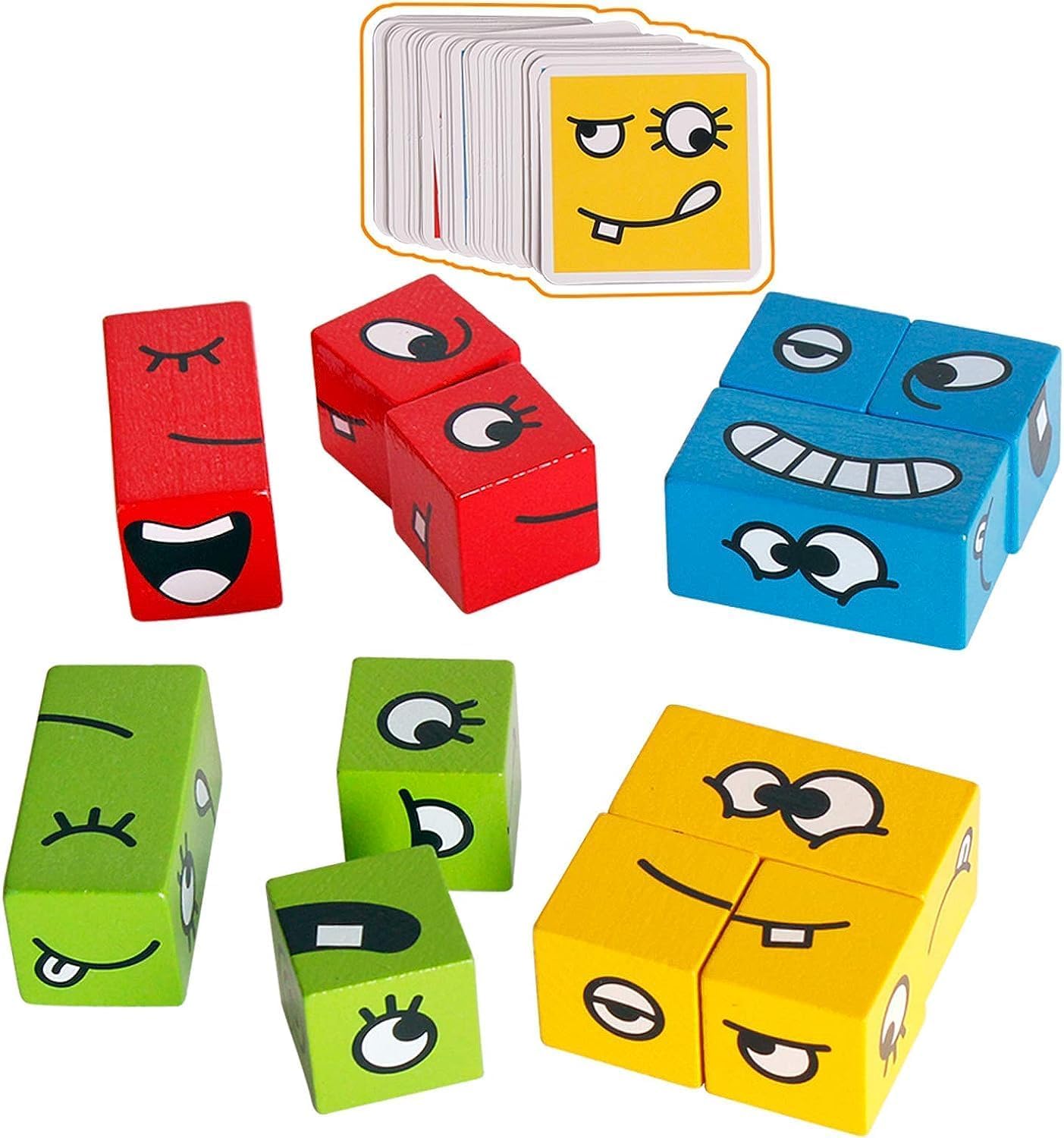
How spatial reasoning develops critical thinking
Ever watched your kid stack blocks? That’s spatial reasoning in action! These cube puzzles challenge children to mentally rotate, visualize, and manipulate objects—skills directly linked to problem-solving abilities later in life. When your child figures out how pieces fit together, they’re actually building neural pathways for complex thinking.
The psychology of pattern recognition
Kids don’t just see random dots and colors on cubes—they’re identifying patterns! This muscle-building for the brain helps them categorize information, make predictions, and understand sequences. Pattern recognition is the foundation for math skills, reading comprehension, and scientific thinking. It’s literally rewiring their brains for success.
Why tactile learning outperforms digital alternatives
Screens can’t compare to the magic of physical cubes in tiny hands. When children manipulate real objects, multiple sensory pathways activate simultaneously—touch, sight, and spatial awareness merge. This multisensory experience creates stronger memory imprints than digital learning, resulting in deeper understanding and better knowledge retention.
Secret Mathematical Principles Inside the Cube
Secret Mathematical Principles Inside the Cube
A. Discover geometric concepts through play
Ever watched a kid spinning that colorful cube? They’re actually absorbing complex geometry without realizing it. As those little fingers twist and turn, they’re grasping spatial relationships, symmetry, and transformations – math concepts that usually bore kids to tears in traditional classrooms. It’s sneaky learning at its finest!
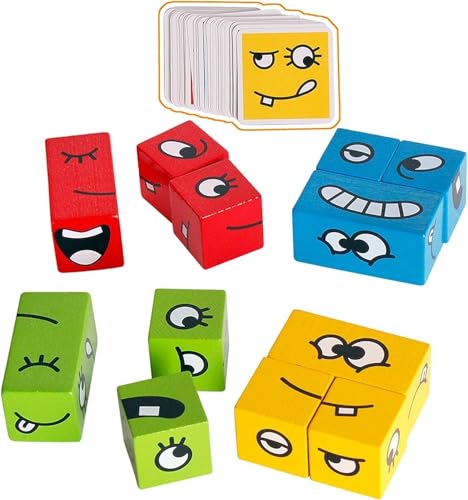
- – Fun & Educational: This Emoji Cube Face Game helps children develop memory, recognition, and fine motor skills while h…
- – Colorful & Engaging: The set includes 4 brightly colored cubes (green, blue, yellow, red) and matching cards with vari…
- – Easy to Play: Simple to understand and play, making it perfect for young children aged 3 and up.

Developing Problem-Solving Skills
How cube challenges rewire young brains
Ever watched a kid tackle a cube puzzle? Their eyes light up as neurons fire in overdrive! These puzzles activate critical thinking pathways that textbooks simply can’t touch. Your child’s brain literally forms new connections with each twist and turn, strengthening their spatial reasoning like a mental workout.
The progressive difficulty system that builds confidence
Kids love the “I did it!” moment. That’s why these cubes are genius – they start simple but gradually get trickier. Your child solves one level, then faces a slightly harder challenge. This steady progression builds their confidence muscle. No more frustration meltdowns – just stepping stones to success!
Turning failures into learning opportunities
The magic happens when they get stuck. Each wrong move teaches persistence better than any lecture could. When your child finally solves that impossible side, they’re learning something powerful: mistakes aren’t dead ends – they’re detours leading to solutions!

- Toys and Games; It contains 104 puzzle pieces
- This floor sized jigsaw puzzle is made of finest quality
- Motor skills devolepment cognitive skills devolepment

- The intelligence hexagon puzzle goes beyond instructions, inspiring creativity as you fit pieces into the bottom plate t…
- Enhance imagination and hand-eye coordination with this engaging brain puzzle featuring colorful, uniquely shaped blocks…
- Crafted from natural, eco-friendly basswood with a smooth, high-quality finish, this puzzle is safe and durable. Non-tox…
Enhanced Memory and Concentration Benefits
A. The cube’s role in extending attention spans
Ever noticed how kids jump from one activity to another? This magical cube changes that. When they’re working on puzzles, their focus stretches from minutes to hours. The physical manipulation coupled with mental challenge creates a perfect attention-training storm. Parents report their fidgety kids suddenly sitting still, completely absorbed!
Building Your Child’s Spatial Intelligence
Building Your Child’s Spatial Intelligence
A. Why spatial IQ predicts STEM success
Think your kid’s block-stacking skills are just play? Think again. Children with strong spatial reasoning are crushing it in science and math later on. The ability to mentally rotate objects, visualize in 3D, and understand how shapes fit together literally rewires their brains for problem-solving in ways nothing else can.
B. From cube mastery to architectural thinking
When kids manipulate a cube, they’re not just playing—they’re building the mental framework architects and engineers rely on daily. This seemingly simple toy trains them to visualize complex structures, understand balance and symmetry, and conceptualize designs before they exist. It’s like giving their brain a blueprint-reading superpower.
C. Activities that transfer cube skills to real-world scenarios
Got a cube master at home? Take it further! Have them design a dream treehouse on paper after cube play. Or challenge them to navigate a shopping mall using only a map. Even cooking together transfers spatial skills—measuring ingredients and following recipe steps. These everyday activities cement cube learning into practical life skills.
The Social Benefits of Cube Mastery
The Social Benefits of Cube Mastery
How cube skills boost classroom confidence
When kids master cube puzzles, something magical happens. They walk taller in class, raise their hands more often, and tackle tough math problems without breaking a sweat. The same kid who once hid in the back row now demonstrates solutions at the whiteboard. It’s not just about solving puzzles—it’s about becoming the classroom hero.
Using cube challenges for family bonding
Friday night cube challenges beat movie night any day. Picture this: everyone gathered around the table, timer set, laughter erupting as Dad fumbles with his cube while your 8-year-old flies through algorithms. These
Brain Development Milestones Unlocked
Brain Development Milestones Unlocked
Critical neural pathways stimulated by cube play
That colorful cube isn’t just a toy—it’s a brain gym! When your child twists and turns it, their brain fires up connections between visual processing and problem-solving centers. These neural superhighways don’t just happen; they’re built through play that challenges spatial thinking and pattern recognition.
Age-appropriate cube challenges for optimal growth
How cube activities support myelin development
- – Fun & Educational: This Emoji Cube Face Game helps children develop memory, recognition, and fine motor skills while h…
- – Colorful & Engaging: The set includes 4 brightly colored cubes (green, blue, yellow, red) and matching cards with vari…
- – Easy to Play: Simple to understand and play, making it perfect for young children aged 3 and up.
- Toys and Games; It contains 104 puzzle pieces
- This floor sized jigsaw puzzle is made of finest quality
- Motor skills devolepment cognitive skills devolepment
- The intelligence hexagon puzzle goes beyond instructions, inspiring creativity as you fit pieces into the bottom plate t…
- Enhance imagination and hand-eye coordination with this engaging brain puzzle featuring colorful, uniquely shaped blocks…
- Crafted from natural, eco-friendly basswood with a smooth, high-quality finish, this puzzle is safe and durable. Non-tox…
From Cube to Creativity
From Cube to Creativity
A. The surprising link between logical and creative thinking
Ever watched your kid solve a cube puzzle? That left-brain logic is actually firing up their creativity too! The switch from sequential problem-solving to imaginative thinking happens naturally when children work with cubes. One moment they’re following patterns, the next they’re dreaming up entirely new solutions nobody taught them.
B. How constraint breeds innovation in young minds
Kids thrive with boundaries. Give them a cube with specific rules, and watch magic happen! Their minds stretch beyond limitations, finding clever workarounds you never imagined. This paradox of restriction creating freedom is why cube play transforms ordinary thinkers into innovative powerhouses who approach problems differently.
C. Artistic applications of cube-based thinking
Cubes aren’t just math toys. They’re launching pads for artistic exploration! Children who master cube concepts start seeing geometry in painting, sculpture, and design. They arrange blocks into stunning sculptures, draw perspective-perfect sketches, and create spatial masterpieces that blend logic with beauty in surprising ways.
D. Breaking conventional thought patterns
Cube play shatters the “one right answer” mindset. When kids discover multiple solution paths, they stop seeking permission to think differently. That cube-solver confidence follows them everywhere, creating young thinkers who question assumptions, flip problems upside-down, and approach challenges with refreshing originality.
Famous Geniuses Who Mastered Similar Puzzles
Einstein’s childhood spatial challenges
Did you know Einstein struggled with spatial puzzles as a kid? These challenges actually helped rewire his brain for revolutionary thinking! His parents noticed how these toys sparked his curiosity – transforming everyday play into foundation-building for the theory of relativity.
Modern innovators who credit 3D puzzles for their success
Tech giants like Elon Musk and Bill Gates swear by puzzle toys! They’ve openly shared how childhood cube-solving sessions trained their brains to spot patterns and think outside the box. These aren’t just toys—they’re pre-programming for future innovation.
What neuroscientists say about puzzle-solving prodigies
Brain scans show puzzle-solving kids develop thicker neural connections in problem-solving areas! Scientists at MIT found cube-masters use both brain hemispheres simultaneously, explaining why these children excel in seemingly unrelated subjects. Your kid’s brain literally transforms with each twist.
Implementing a Genius-Building Cube Routine
Implementing a Genius-Building Cube Routine
A. The ideal 15-minute daily practice schedule
Kids thrive on consistency, not marathon sessions. Break cube time into three 5-minute chunks: exploration, technique practice, and free play. This bite-sized approach keeps their brains engaged without overwhelm. The magic happens when these short sessions become a non-negotiable part of their day, like brushing teeth.
The humble cube in your child’s hands is far more than a toy—it’s a gateway to extraordinary cognitive development. Through mathematical principles, problem-solving challenges, and spatial reasoning exercises, this simple object creates neural pathways that strengthen memory, concentration, and creative thinking. The social skills, brain development milestones, and creative expression that emerge from cube-based activities mirror the early experiences of many renowned geniuses.
Make cube exploration a regular part of your child’s routine to unlock their full potential. Whether it’s 15 minutes of daily puzzle time or weekly cube challenges, consistency is key to developing genius-level thinking. By introducing this powerful learning tool into your child’s life, you’re not just providing entertainment—you’re setting the foundation for a lifetime of exceptional intellectual growth and achievement. Your future genius awaits, one cube rotation at a time.
[…] your bathroom shelf is probably crowded with fancy, chemical-filled products promising miracles. Meanwhile, this traditional Ayurveda Mridul Soap has been quietly delivering results with simple, natural […]